
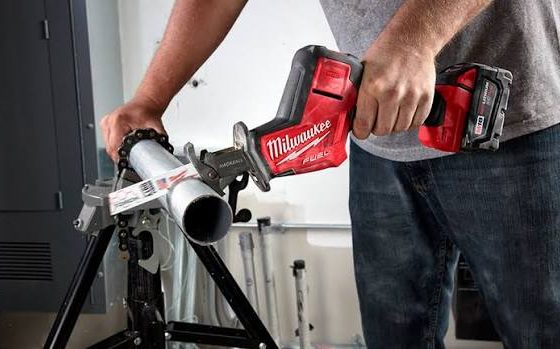

The tool matters. But the blade matters more. Professionals who understand this distinction consistently achieve cleaner cuts, longer blade life, and faster project completion than those who treat blade selection as an afterthought. Reciprocating saws are only as effective as the blades installed in them, and the range of blade options available today reflects just how precisely this technology has been developed for specific materials.
This guide examines the blade characteristics that define performance across wood, metal, and PVC, along with practical guidance for selecting and maintaining blades in professional settings.
Why Blade Choice Directly Controls Cutting Outcome
A reciprocating saw blade is engineered to perform within a specific set of conditions. Tooth geometry, material composition, tooth count, and blade length all work together to determine how efficiently the blade removes material, how long it maintains its edge, and how cleanly it leaves the cut surface.
Using a blade outside its intended material category doesn’t just produce poor results—it accelerates blade wear, increases heat generation, and places additional strain on the tool’s motor. A wood blade used on metal will dull within seconds. A metal blade dragged through PVC may melt the material rather than cut it.
Understanding blade specifications removes the guesswork from this decision.
Teeth Per Inch: The Most Important Number on the Packaging
TPI—teeth per inch—is the single most informative specification on a blade package. It describes how many cutting teeth are present within each inch of the blade’s length, and it directly determines the balance between cutting speed and cut quality.
Low TPI blades (between three and ten) remove large amounts of material quickly. Each tooth takes a bigger bite, which accelerates progress through soft, open-grain materials like timber and lumber. The resulting cut is fast but rough, which is acceptable for demolition and structural work.
High TPI blades (between fourteen and thirty-two) take smaller, more frequent cuts. This produces smoother finishes and reduced burring on cut edges—properties that become essential when cutting metal pipe, thin-walled tubing, or sheet material.
Mid-range TPI blades occupy a practical middle ground, offering reasonable speed with acceptable finish quality across a broader range of materials. These are often the choice for professionals who switch between material types frequently throughout the workday.
Wood-Cutting Blades: Speed, Aggression, and Specialty Applications
Standard wood blades feature a low TPI profile and a tooth geometry designed to clear sawdust quickly. The gullets—the spaces between each tooth—must be large enough to prevent clogging, which would slow the cut and overheat the blade body.
Demolition-specific wood blades incorporate embedded carbide grit or hardened tips to handle wood that may contain embedded fasteners—nails, staples, or screws left behind in renovation work. Striking a nail with a standard wood blade destroys the tooth edge immediately. A demolition blade shrugs off these encounters with minor wear at most.
For working with engineered wood products—laminate, MDF, or particleboard—a finer-toothed blade produces edge quality that reduces additional finishing requirements. These materials chip and splinter more easily than solid timber, so aggressive blades create more cleanup than they’re worth.
Metal-Cutting Blades: Material, Tooth Form, and Heat Management
Metal blades are built around one primary challenge: maintaining cutting edge hardness while resisting the heat generated by friction against metal surfaces.
Bi-metal construction addresses this by combining two distinct materials. The blade body is formed from a flexible alloy steel that absorbs the mechanical stress of reciprocation without cracking or fatiguing. The cutting teeth are made from high-speed steel—a hardened material capable of retaining its edge at elevated temperatures.
The tooth form on metal blades is typically set in an alternating pattern that prevents the blade from binding in the kerf. Variable-pitch blades—where TPI varies slightly across the blade length—reduce harmonic vibration during the cut, which is particularly noticeable when cutting thin-walled or hollow metal sections.
For cutting non-ferrous metals such as aluminum or copper, slightly coarser blades than those used for ferrous materials produce better chip clearance and reduce galling on the cut surface.
PVC and Plastic Blades: Why Standard Blades Often Fail
PVC pipe, plastic conduit, and synthetic composite materials require a cutting approach that many standard blades cannot provide efficiently. The issue stems from the material’s response to friction and heat.
Thermoplastics—PVC included—soften and melt when exposed to the heat generated by fast, aggressive cutting. A dull blade or excessive speed causes the material to smear rather than shear, leaving a fused, deformed edge that requires secondary cleanup.
Blades designed for plastics feature a tooth geometry optimized for shearing rather than grinding. The cutting action severs material fibers cleanly without generating sufficient heat to cause melting. Some professionals use fine-toothed wood blades for PVC with satisfactory results, provided the saw speed is kept moderate.
Cooling time also matters. Allowing the blade to cool briefly between cuts during extended PVC sessions prevents heat accumulation from compromising both the blade and the workpiece.
Blade Length and Its Effect on Reach and Control
Blade length determines how deep the saw can cut and how much control the operator has during the cutting process. Longer blades extend reach into deep materials or allow cuts to begin from a distance in demolition scenarios. Shorter blades provide better control in confined spaces and reduce flex during precision cuts.
A blade that flexes excessively during a cut—often caused by using a long blade on thin or narrow material—wanders from the intended cut line. For accurate cuts, matching blade length to material thickness minimizes flex and improves outcome consistency.
Extending Blade Life Through Proper Use
Even the highest-quality blade wears faster when misused. Several habits extend blade service life considerably.
Starting cuts at a low speed reduces initial tooth stress and prevents the blade from skating across hard surfaces before engaging. Maintaining consistent, moderate pressure—rather than forcing the blade—allows the teeth to do the work efficiently. Forcing a blade generates heat and stress that accelerate wear on both blade and motor.
Storing blades correctly, keeping them clean of debris, and inspecting them before each use catches wear early and prevents blade failure mid-cut—an outcome that can damage the workpiece and create safety risks.