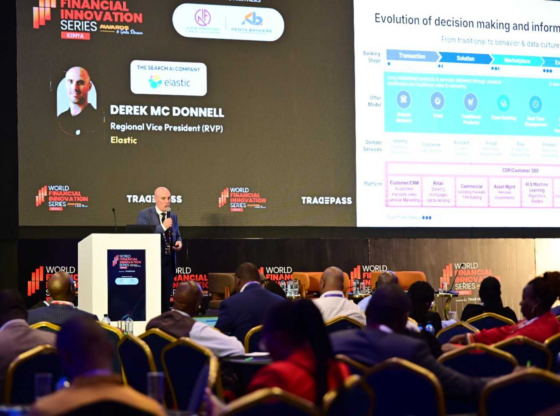

Over the last several decades, the banking sector has undergone a phenomenal revolution, as a branch-based system has become one of the most interconnected digital environments. The use of modern technologies has become increasingly common in financial institutions to enhance the customer experience, operational efficiency, security, and accessibility. Fast-paced technological developments in mobile banking, cloud infrastructure, artificial intelligence, and real-time payment systems reflect current consumer and business expectations. This is as evidenced by the worldwide increase in interest in financial innovation, fintech collaboration, and next-generation banking technologies in the digital banking expo in Kenya discussions.
New banking customers require smooth, quick, and personalized digital experiences across multiple platforms. Financial institutions are responding by making heavy investments in automation, data analysis, cybersecurity, and a digital-first approach. Financial technologies continue to evolve, and banks are re-architecting customer interactions, expanding financial inclusion, and building operational systems that are scalable and agile to support future economic growth and digital transformation.
The Shift Toward Intelligent Financial Ecosystems
In today’s light, the word banking itself has progressed to the next stage, where banks in the old traditional form and cash are no longer in vogue. FIs are also beginning to embrace digital ecosystems to boost their access and automation, and to offer more integrated banking experience for consumers as well as their business customers.
- Enhancing Customer Convenience Through Digital Access
Internet banking offers the clients opportunities to access financial services from any place and at any time. Cloud-based, online portals, and mobile applications facilitate transactions, account management, and financial planning by using banking systems that can be connected to these managed workflows. These technologies improve accessibility and reduce manual aspects of services and their corresponding physical facilities.
- Supporting Faster Financial Transactions
The customers now need the transfer of funds in real time, real-time payment processing, and digital transactions. The recent banking technologies enable quicker financial transactions as compared to the traditional banking systems, which add up to no delay at all. The faster the customer is satisfied, the more efficient the operations of financial institutions will be, and the more satisfaction they will get.
- Improving Financial Inclusion Across Communities
New Digital banking technologies are broadening financial opportunities for less well-served groups. Mobile banking, electronic wallets, and NetBanking services help users and companies to transact with the financial industry without inhering fully fledged communication networks of branches. Increased inclusion and access to economic opportunities are supported with this change.
- Enabling Personalized Banking Experiences
Financial institutions are leveraging customer data and analytics to deliver more personalized customer services. AI can assist businesses in delivering recommendations through suggestions, personalized financial products, and anticipatory banking reports that can help financial institutions to improve customer interaction and offer personalized financial products, depending on how customers behave and act.
How Digital Banking Expo Conversations Are Driving Financial Innovation
The use of global financial conferences and technology events is contributing significantly to the banking future. Digital banking expo in Kenya is growing in tandem with the increased collaboration between banks, financial tech companies, governments, and tech providers to accelerate the shift to finance.
- Encouraging Collaboration Between Banks and Fintech Companies
Financial innovation is facilitated by a growing number of partnerships between traditional banks and fintech organizations. Industry events offer the opportunity to partner and open doors to institutions to new innovations, digital nature, and accelerated innovation in competitive financial markets.
- Exploring Emerging Financial Technologies
The new technologies showcased at the banking shows range from artificial intelligence to blockchain, cloud computing, open banking, and systems of digital ID verification. These are changing the way in which financial services are delivered, and they allow more flexibility in operations and customer interaction.
- Promoting Smarter Regulatory Discussions
With the growing digitalization of financial systems, regulatory systems need adaptation to tackle cybersecurity, privacy, compliance, and security of digital transactions. The dialogue in industry helps regulators and financial institutions to align on policies that facilitate innovation and do not impede financial stability and/or consumer protection.
- Supporting Sustainable Banking Transformation
Sustainability of digital transformation on a long-term basis is banking transformation in modernity. A scalable digital infrastructure, operational agility, cloud adoption, and environmentally friendly technologies are becoming increasingly important priorities for these industry leaders in order to provide long-term business development and financial sustainability.
Why Digital Banks Are Rebuilding the Future of Financial Services
Digital banks are a sign of the times and how technology is changing financial services. They place great emphasis on convenience, automation, speed, and customer-centric experiences in these institutions, which operate more flexibly than most traditional models of banking.
- Offering Fully Digital Financial Experiences
Digital banking institutions are first in terms of service onboarding customers, and provide their consumers with real-time transactions, customer support services, and financial management applications. These services provide extra convenience and ease in banking for businesses and consumers.
- Supporting Faster Innovation Cycles
Digital banking models enable institutions to become and use new technologies at a faster rate. Agile business models assist banks to initiating new services more quickly and responding swiftly to the changing needs of customers and market trends.
- Improving Cost Efficiency in Banking Operations
A digital infrastructure helps reduce dependence on the branch network and manual operation processes. A lighter operational burden could help the institutions to have finances more distributed in scalable and customer-focused financial services.
- Enhancing Customer Engagement Through Technology
Digital banking applications make use of analytics, automation, and personalization to enhance customer interactions. The improved customer experiences assist the banks in building solid customer loyalty and providing quicker and easier financial services.
Conclusion
As digital innovation, automation, customer-centric financial services, and cloud technology become increasingly important parts of banking, the industry as a whole is changing. Modern financial institutions are investing in smarter systems to increase operational efficiency, improve customer experiences, enhance security, and enable long-term scalability. Smaller players in the banking world are not the only ones paying closer attention to the trend toward digital banks, as the industry as a whole is changing, and with that change, organizations are adapting to new technologies and consumer needs.
The World Financial Innovation Series (WFIS) – Kenya is a forum of banking executives, bankers, fintech entrepreneurs, technology providers, and industry thought leaders who discuss how the financial evolution will proceed and the innovation of the digital bank. By sharing knowledge, engaging in discussions, and building strong working relationships, they aim to promote smarter financial systems, modernized operations, and the digital sustainability of the banking sector.